
Child Marriage and Forced Conversions in Pakistan
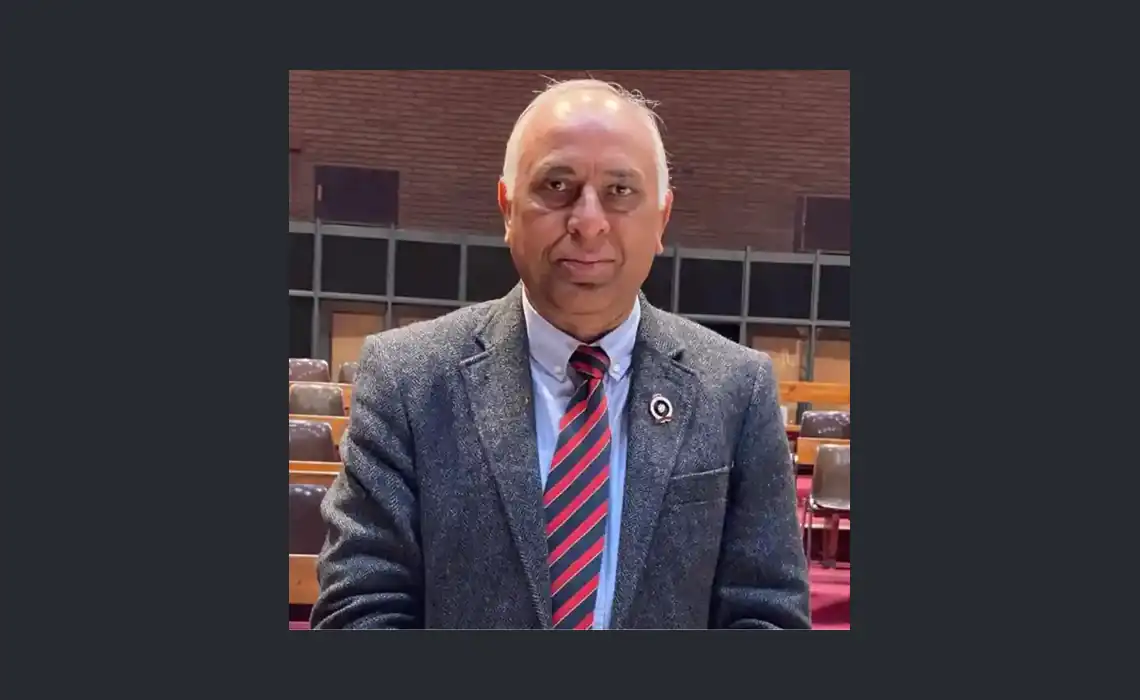
By Khalid Shahzad
The Gap Between Legislation and Ground Realities
There is a deep divide between legislation and ground realities in Pakistan regarding children’s rights, particularly child marriages and forced marriages of minority girls. On one side, in global forums, the European Commission, parliamentary committees, and international conferences, government officials, ministers, advisors, and constitutional commissions present rosy statistics and the gloss of paper reforms. On the other side, court rulings, recent reports from the United Nations and local institutions, and distressing incidents that surface day after day reveal a completely different and grim picture. The recent Lahore High Court ruling and the latest figures emerging from across the country prove that merely enacting laws or presenting an “all is well” report on the global stage cannot end social coercion and legal injustices.
Recently, Justice Munawar Iqbal Duggal of the Lahore High Court issued a crucial written judgment on a petition filed by a citizen, Muhammad Aslam, who had sought the registration of a case against a man accused of marrying his underage daughter, Hina Aslam. The High Court clearly ruled that under the Punjab Child Marriage Restraint Act 2026, marrying a girl under the age of eighteen is a crime under the law. The most significant point of this verdict is that the court rejected the traditional excuse of a minor girl’s consent, stating that while a child’s wish has its place, due to youth and immaturity it cannot automatically be given decisive weight. The fundamental purpose of the law is to ensure the protection, basic rights, and welfare of children, not to provide legal cover to decisions made under youthful emotion or pressure.
While this Lahore High Court ruling is a welcome legal development, it also reflects the harsh reality that child marriages have not stopped in Punjab despite the enforcement of a new law. This is further confirmed by the latest report released in November 2026 by the Centre for Social Justice (CSJ), titled “The Persisting Issue of Forced Conversions of Christian and Hindu Girls,” which points to a deeply alarming trend. According to the report, during the first ten months of 2026 (January to October), at least 84 verified incidents of abduction and forced religious conversion of minority girls and women were reported across Pakistan. Surprisingly and worrisomely, unlike the past five years, more incidents were reported in Punjab than in Sindh this year: out of the 84 cases, 47 were reported in Punjab, 36 in Sindh, and 1 in Balochistan.
According to the figures in the latest report, the victims included 49 Christians (46 from Punjab and 3 from Sindh) and 35 Hindu girls and women (33 from Sindh, 1 from Punjab, and 1 from Balochistan). Looking at age, at least 43 of the victims—more than half—were girls under eighteen, including 37 aged between fourteen and seventeen and 6 under the age of fourteen. At the district level, the situation is so severe that the highest number of cases nationwide—18—was reported in the provincial capital, Lahore, followed by 7 in Sindh’s Sanghar district, 6 in Faisalabad, 5 in Tando Allahyar, and 4 each in Hyderabad and Mirpurkhas.
Prior to this, a joint report by UNICEF and the National Commission on the Rights of the Child (NCRC), “The State of Children,” had already made clear that 7.5 percent of women aged 20–24 in Sindh had married before the age of fifteen, according to Sindh MICS 2018–19 data cited in The State of Children in Pakistan 2024. This is a retrospective survey measure, rather than the percentage of all girls currently married. Reports by United Nations experts also corroborate that in the past, most cases of forced conversion and forced marriage occurred in Sindh’s Mirpurkhas, Sanghar, and Ghotki districts, where innocent, underage girls aged eleven to eighteen are targeted.
The cases of 13-year-old Kalpana Meghwar from Umerkot, Sindh, and 14-year-old Bindiya Kumari from Sibi, Balochistan, have raised concerns over alleged abduction, forced religious conversion and child marriage. At a Lahore press conference on November 4, 2026, Rwadari Tehreek called for the annulment of their marriages and an impartial investigation. According to reporting on the families’ allegations, Kalpana’s school and NADRA records indicate that she was thirteen, while subsequent documents described her as an adult acting voluntarily. The discrepancies require an impartial investigation. The recent CSJ report also expresses deep concern over this very point: despite legislation, the response of law enforcement agencies and courts often remains ineffective. An organized network of nikah registrars, fake witnesses, and creators of bogus documents acts as a facilitator in portraying underage girls as adults, while every effort toward effective legislation against forced conversion in the Sindh Assembly falls victim to pressure from religious circles.
In the author’s view, official presentations at international forums place too much emphasis on legislation and awareness campaigns, while giving insufficient attention to gaps in implementation. This is a criticism of the priorities and effectiveness of the government’s response, rather than an established finding that officials or commissions fabricated reports. Public reporting should allow progress to be assessed against investigations, prosecutions and practical protection for children.
This contradiction between ground realities and government claims is not merely mismanagement; it is criminal negligence. When 18 cases involving minority girls and women are reported in Lahore during January–October 2026, when age records in cases involving girls such as Kalpana, 13, and Bindiya Kumari, 14, are disputed, or when Hina Aslam’s father has to knock on the High Court’s door for justice, the speeches read at international conferences become meaningless. The demand of civil society organizations and human rights activists is entirely justified: if passing a new law against forced conversion is difficult due to political expedience, existing laws—namely the Punjab and Sindh Child Marriage Restraint Acts—should at least be strictly enforced.
If the state is genuinely serious about protecting children’s rights and minorities, it must take practical steps rather than relying on paperwork and performative displays in global forums. It is imperative to hand down exemplary punishments to elements issuing fake age certificates, nikah officiants violating the law, and investigating officers showing negligence. Otherwise, law books will keep filling up, applause will keep ringing out at international conferences, and our innocent girls will continue to fall victim to social coercion and legal loopholes.
Correction: An earlier version misstated Bindiya Kumari’s age and home district. She is reported to be 14 and from Sibi, Balochistan; Kalpana Meghwar is reported to be 13 and from Umerkot, Sindh. The judge’s name has been corrected to Munawar Iqbal Duggal, the population and survey period behind the 7.5 percent figure have been clarified, and unsupported assertions have been revised.